← Back to portfolio
Case Study · AI-Assisted Ghostwriting

The Studio
She Built

How a 16-chapter nonfiction book was produced with a structured human and AI framework that kept the author's real voice intact from the first page to the last.

16 chapters First draft in 3 weeks 55,000+ words
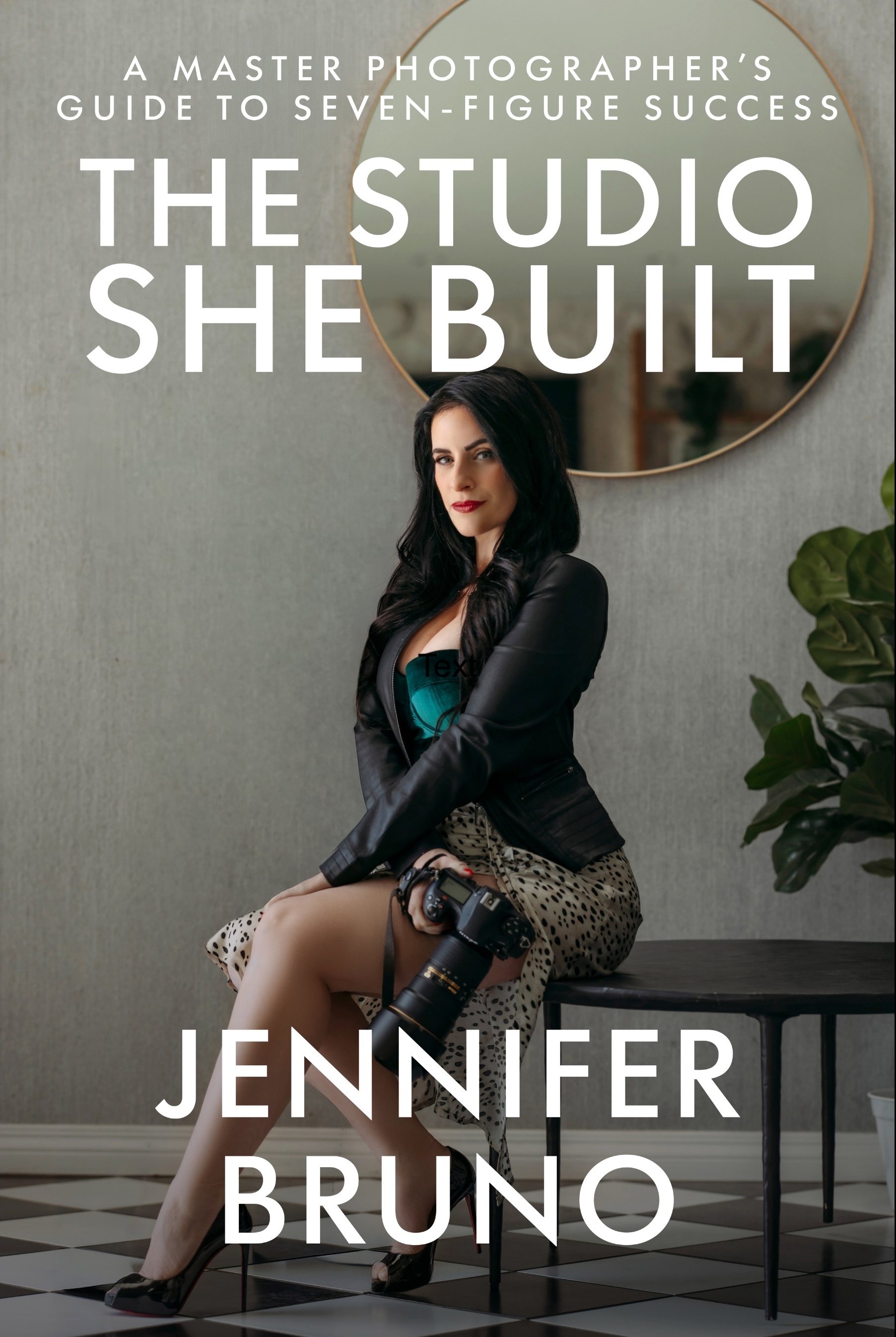
The Studio She Built book cover, by Jennifer Bruno
Scroll to read the process↓
The Challenge

Three pressures at once

i.

Volume

Hundreds of thousands of words of raw material, spread across training recordings, interviews, voice notes, and early drafts.

ii.

Voice

Her students knew her voice from years of videos. They would spot generic AI writing in a single sentence.

iii.

Coherence

Scattered, unstructured source material had to become one cohesive book that read as publication ready.

Inputs

Never write from a blank page

Every chapter was built from the author's own material. Nothing was invented. When a source ran thin, the draft flagged the gap for her review instead of filling it with a confident guess.

Raw material in. Real voice out.
100+ training recordings
Interviews and voice notes
Case studies and student results
↓
Structured source map
↓
Chapter drafts grounded in real material
The Framework

The One-Shot Book System

A phase-based workflow that runs two nested loops, one for the whole book and one for every chapter inside it.

Outer loop
Per book
  1. Audit the full outline and every chapter status
  2. Prioritize the next chapter to write
  3. Draft it through the inner loop
  4. Check callbacks and cross-chapter continuity
  5. Update the master outline, then repeat
Inner loop
Per chapter
  1. Assemble every source mapped to the chapter
  2. Draft the whole chapter in one pass
  3. Macro edit for structure and arc
  4. Micro edit for voice and specificity
  5. Flag open gaps, then archive the version
Structure fixed first, polish second. Problems surfaced early rather than at the final read.
The Differentiator

Protecting the author's voice

Voice DNA, drawn from her own recordings

  • Short declarative lines that land after longer passages
  • Direct address that speaks straight to the reader
  • Permission-giving authority
  • Clinical precision that pivots to real vulnerability
  • Generational storytelling and single-line reveals

Removed on sight

  • Hedging language and corporate jargon
  • Hustle-culture energy
  • Over-polished prose that flattens her rhythm
  • Long paragraphs where a single line should stand alone
  • Passive voice where active is clearer
The voice was defined before it was reproduced. The AI operated inside those rules. It did not invent them.
Infrastructure

Built like software, not a document

Tooling

  • Claude as the drafting and editing engine
  • Cursor as the project workspace
  • Git and GitHub for version control and author edits
  • A persistent CLAUDE.md file that loaded full project context into every session
  • Ten reusable skill files for repeatable operations

Quality gates

  • A six-beat structure every chapter followed and was audited against
  • A consent register tracking every named person
  • A never-invent rule enforced on every draft
  • Archive before overwrite, so no version was ever lost
  • An audit grade per chapter before line editing began
Outcomes

A book, and a system that outlasts it

Amplify the author.
Don't automate her.